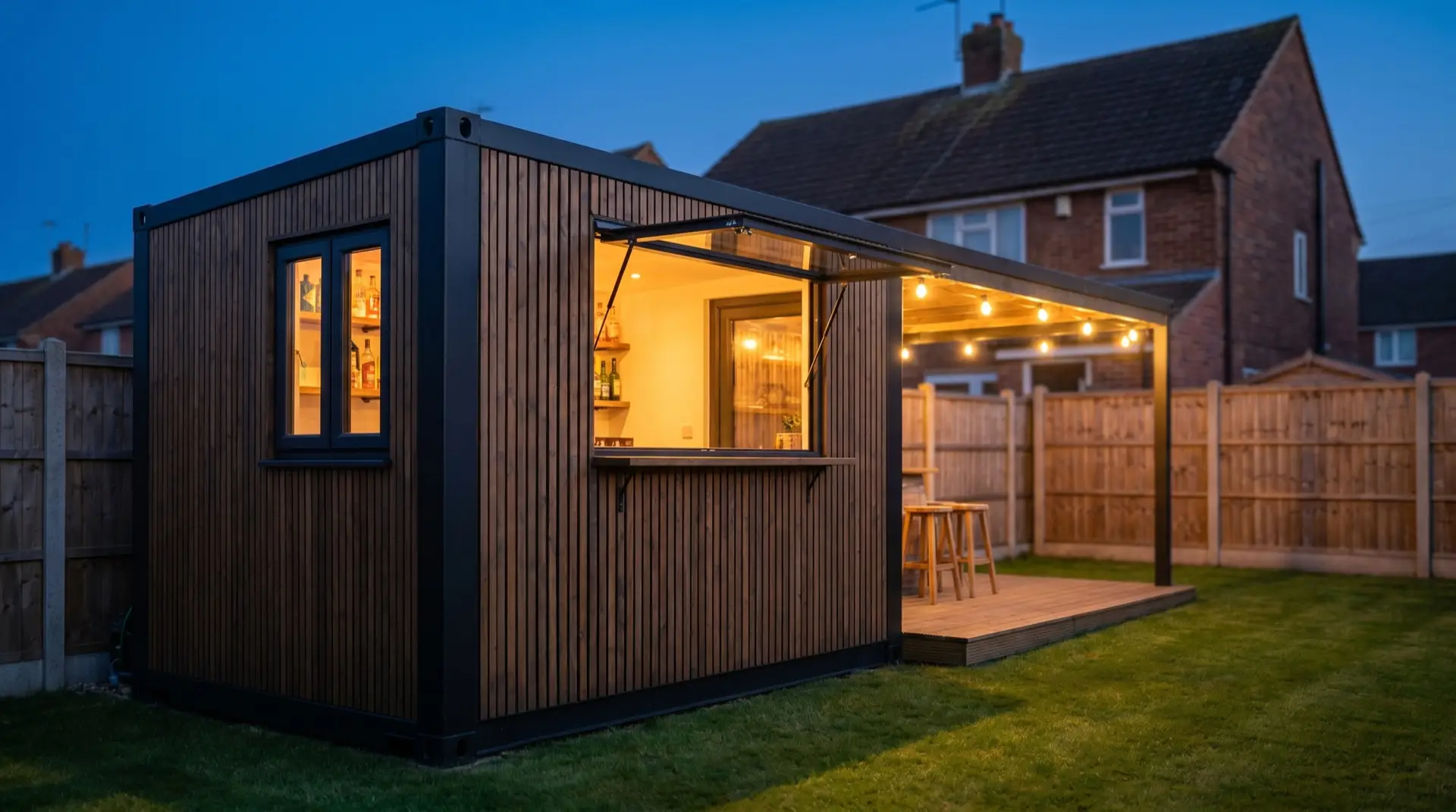
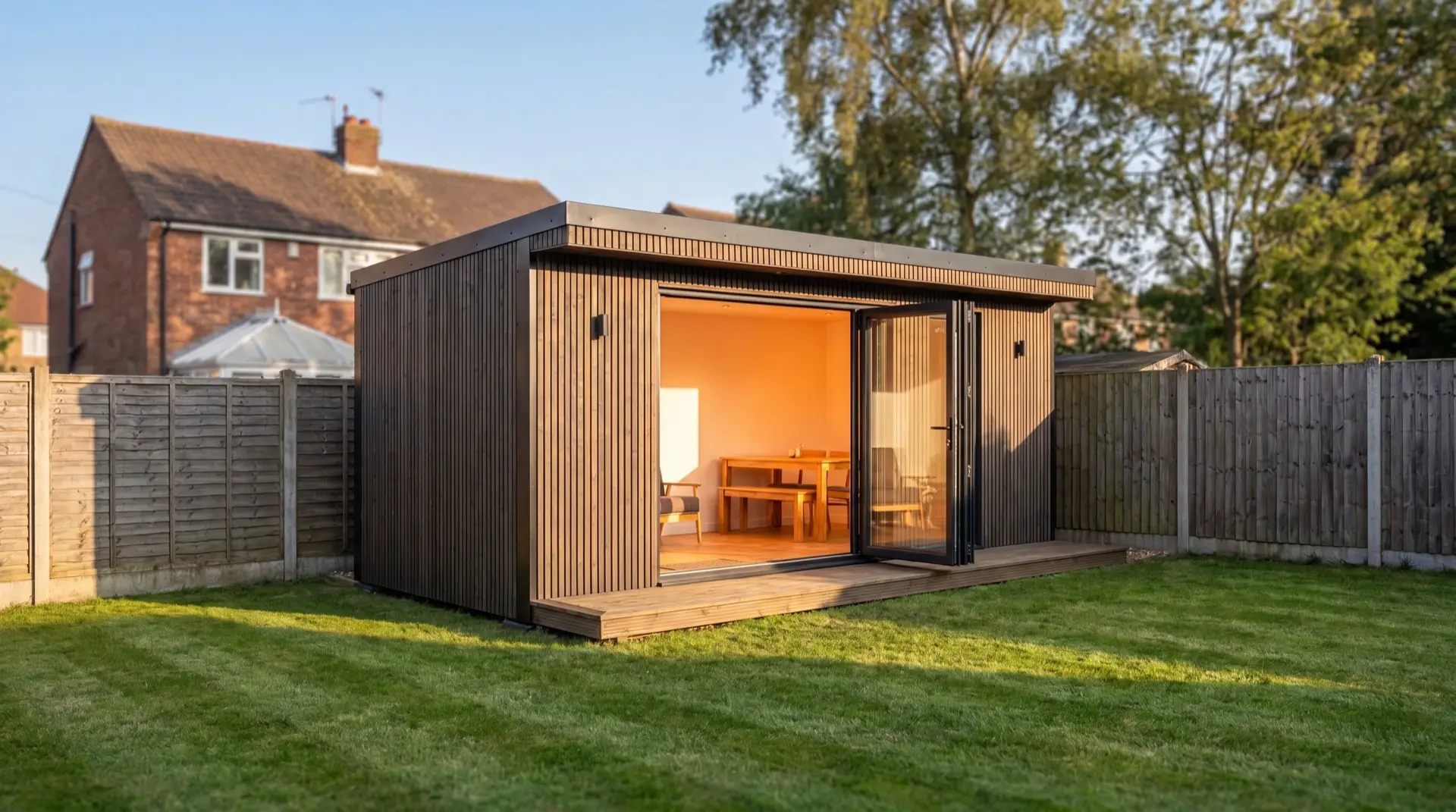
Somewhere the work can live
Makers, artists, woodworkers, producers and side-hustlers all hit the same wall eventually: the work outgrows the kitchen table, the garage or the spare room, and there’s nowhere it can just stay set up. A converted container gives you a dedicated, secure, properly serviced space where tools stay out, projects stay in progress and the mess stays in one room, without taking over the house.
We build the space around what you make. A woodworking or maker’s workshop needs solid power, bright even light, room to move around a bench and good extraction. A recording or music studio needs the opposite of noise: acoustic treatment, sound isolation and a controlled, comfortable room. A painter or photographer wants light (north-facing glazing or skylights) and clean wall space. We start from the work and design back to the room.
Power, light and a layout that works
The two things a workspace can’t compromise on are power and light, and both are decided up front. We fit ample sockets where you’ll actually use them, at bench height, along the walls, wherever the kit lives, and can upgrade the supply or run three-phase for heavy machinery. Lighting is bright, even and LED, with task light where precision matters. The layout is planned around your workflow so you’re not working around the building.
Underneath it all the shell is insulated to a real standard, so the studio is usable in winter as well as summer, which is important when you’re spending whole days in it. The steel structure is secure, which matters when there’s valuable tools and equipment inside, and it locks up solid when you’re done for the day.
Finished by a tradesman
Jack’s fifteen-plus years as a kitchen fitter is, at heart, workshop craft: precision joinery, fitted storage and getting a working space laid out so everything has its place. That’s exactly what a good studio or workshop needs: built-in benches, shelving and storage made to fit, a finish that’s hard-wearing rather than precious, and a room that’s been thought through by someone who works with tools for a living. Because we hold our own container stock, the build starts when it’s agreed rather than waiting on a supplier.
Sized to the job
A 20ft container gives you a generous single-craft workspace; a 40ft gives you room to separate messy work from clean, or a workshop with a small office or finishing area built in. We’ll size and lay it out around your tools, your materials and how you move through a job, and we can link or stack units for a larger setup.
Sited without the groundwork
The studio is built complete at our workshop and delivered finished on a HIAB lorry that lifts it into position over fences and walls, sets it level on pad stones and leaves it ready to plug in and work. For most sites that means no foundations and no concrete. Access and siting are planned with you ahead of delivery day. And because it’s a container, it moves with you if you relocate. The workshop you’ve set up just right doesn’t have to be left behind.
Planning
Used as a day workspace, not for sleeping, a studio or workshop normally falls under permitted development as an outbuilding: behind the house, single storey, kept low near boundaries, under half the garden, with tighter rules in conservation areas, AONBs and for listed properties. Electrics always fall under Part P, which we wire to. If the unit is for business use or on commercial land, the position can differ, so we’ll talk it through with you. (Always verify with your local planning authority; Scotland, Wales and Northern Ireland differ from the England guidance here.)
Built around your craft
Every workshop and studio is different because every maker is. Tell us what you do, what you make and what gets in your way now, and we’ll design, build, deliver and site a space built around the work, backed by our 5-year structural guarantee on the shell. Because the layout and services are bespoke, we price each build to the brief rather than off a list. Tell us what you need and we’ll put a clear quote together.